
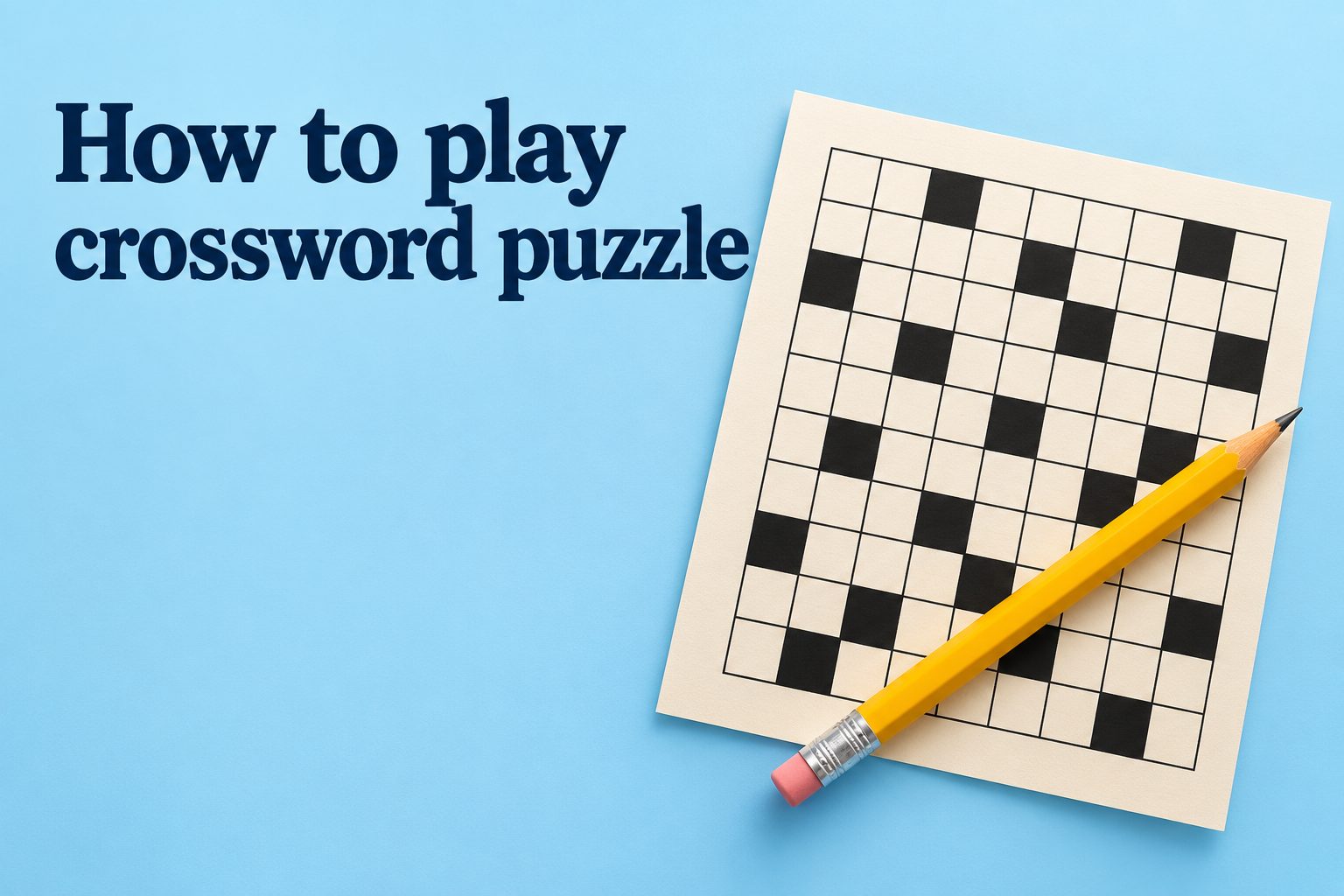
Learning how to play crossword puzzle games is a satisfying way to test vocabulary, memory, logic, and general knowledge. At first, a grid full of empty squares and short clues can seem intimidating, but the basic idea is simple: solve each clue and enter its answer so the crossing letters support other answers.
Crosswords reward patience more than speed. You do not need to know every answer immediately, and experienced solvers regularly leave difficult clues for later. Each confirmed word gives you letters that narrow the possibilities around it, turning a large puzzle into many smaller, manageable decisions.
This guide explains how crossword puzzles work, how to read clues, how to build momentum, and how to recover when an answer is wrong. It also covers useful habits for beginners and practical ways to enjoy puzzles without becoming frustrated.
A crossword puzzle is a word grid containing horizontal and vertical answers. Every answer is connected to at least one other answer through shared letters. The numbered squares correspond to clues, usually grouped into Across and Down lists, and each clue points to a word or phrase that fits a specific number of boxes.
The most important rule is that an answer must satisfy both its clue and its crossings. A word may look correct by itself, but if one of its letters conflicts with a crossing answer, it needs to be reconsidered. This built-in checking system is what makes crosswords feel logical as well as linguistic.
Clue wording matters. A direct clue such as “Large ocean” may seek a simple definition, while a clue with a question mark often signals a joke, wordplay, or an unexpected interpretation. Pay attention to tense, singular or plural forms, abbreviations, and punctuation because they often reveal the answer’s form.
Puzzle difficulty varies widely. Beginner crosswords tend to use straightforward clues and familiar words, while larger or themed puzzles may use cultural references, puns, unusual letter patterns, or long phrases. Starting with an easier puzzle lets you learn common clue conventions without pressure.
A crossword is not a test you must complete in one sitting. You can solve a few easy entries, take a break, and return with fresh attention. Often, a clue that seemed impossible becomes clear after other answers provide several useful letters.
How Do You Play A Crossword Puzzle?
Start With The Title And Instructions
Read the puzzle title, if it has one, before filling any squares. A title may hint at a theme, repeated wordplay pattern, or subject area. Then check the grid size and any instructions. Knowing whether the puzzle has special rules prevents you from treating an unusual entry like an ordinary word.
Scan Both Clue Lists First
Look through the Across and Down clues before committing to difficult answers. Mark the clues you know immediately, including short words, common facts, and obvious definitions. This quick scan identifies easy starting points and helps you avoid spending too much time on one uncertain clue.
Count The Available Squares
Before writing an answer, count its boxes. Letter count is a valuable filter because it eliminates many possible words. For example, a clue suggesting “happy” could have several answers, but a five-letter space and known crossing letters may make one option much more likely.
Fill The Surest Answers First
Enter answers only when you are reasonably confident they fit the clue and length. Easy entries create crossing letters that unlock harder clues nearby. A reliable early answer is more useful than a clever but uncertain guess, because incorrect letters can confuse the rest of the grid.
Use Crossing Letters As Evidence
After solving a few entries, return to the unanswered clues and use the visible pattern. If a five-letter answer looks like _ R _ _ E, consider words that match both the definition and the pattern. Crossings should guide your thinking, not merely confirm a random guess.
Check Grammar And Clue Signals
Make sure the answer matches the clue’s grammar. A plural clue normally needs a plural answer, a past-tense clue needs a past-tense form, and an abbreviation clue may require shortened wording. Question marks, quotation marks, and casual phrasing can also indicate a playful or indirect answer.
What Makes Crossword Clues Easier To Solve?
1. Look for the clue’s exact grammar before searching your memory. Small details such as plural endings, verb tense, and abbreviations often determine the correct answer form.
2. Separate facts from wordplay. A factual clue usually asks for a direct definition or reference, while a humorous clue may require you to rethink the obvious meaning.
3. Use word length as a constraint. When several answers seem possible, the number of squares quickly removes choices that cannot fit the grid.
4. Read difficult clues aloud in a different rhythm. Hearing the words can reveal an alternate meaning, especially when a clue is built around a pun or familiar phrase.
5. Keep partial patterns visible and revisit them later. A few crossing letters can turn a vague clue into an answer that is easy to recognize.
Benefits Of Playing Crossword Puzzles
- Vocabulary Practice: Crosswords expose you to synonyms, idioms, spelling patterns, and less familiar words in a memorable context.
- Focused Attention: Solving one clue at a time encourages concentration and gives your mind a calm, structured task.
- Flexible Thinking: Wordplay clues teach you to consider more than one meaning for the same word or phrase.
- General Knowledge: Many puzzles introduce history, geography, arts, science, and everyday culture through short clues.
- Problem-Solving Confidence: Each completed entry provides a small success and shows how steady reasoning can solve a larger challenge.
- Screen-Free Relaxation: A paper puzzle can provide a quiet break from notifications while still keeping your mind engaged.
How Can You Improve At Crossword Puzzles?
Learn Common Crossword Vocabulary
Many puzzles reuse compact words because they fit grids easily. As you solve more often, you will notice recurring terms, abbreviations, and clue styles. Keep a mental or written note of unfamiliar answers, but focus on learning why they matched the clue rather than memorizing isolated lists.
Solve In Short Sessions
A short, regular practice session is often better than forcing a long solve when you feel tired. Ten or fifteen focused minutes can build familiarity with clue patterns. Stopping before frustration takes over also makes it easier to return with a clearer perspective later.
Leave Uncertain Answers Lightly
If you solve on paper, write doubtful answers lightly or make a small note beside the clue. In a digital puzzle, use a tentative entry if that feature is available. This habit makes corrections easier and prevents one weak guess from feeling permanent.
Work From Easy Areas Outward
Clusters with several easy clues are valuable because each answer creates more crossing letters. Instead of jumping randomly across the grid, develop one reliable area and expand from it. This approach creates useful patterns faster and reduces the number of totally blank clues.
Study Mistakes Without Shame
When you check a puzzle, compare incorrect entries with the clue and crossings. Ask whether you missed a grammar signal, chose a near synonym, or overlooked wordplay. Treating mistakes as feedback helps you improve much faster than simply erasing them and moving on.
Use Hints Sparingly And Purposefully
Hints can be helpful when a puzzle has stalled, especially for a single key crossing. Use them to restart your thinking rather than reveal every hard answer. After seeing a hint, examine how its letters and clue wording connect so you gain a technique for future puzzles.
Crossword puzzles become easier when you approach them as connected word problems rather than a collection of trivia questions. Start with clear clues, respect word length and grammar, and let reliable crossing letters guide the next choice.
The strongest habit is patience. Leave uncertain entries open, revisit hard clues, and use each correction to notice a new pattern. With regular practice, the grid becomes less intimidating and much more enjoyable.
Whether you solve for relaxation, learning, or a daily mental challenge, the process stays the same: read carefully, build from what you know, and let the puzzle reveal itself one crossing answer at a time.
FAQs About How To Play Crossword Puzzles
Is It Okay To Guess In A Crossword Puzzle?
Yes, but make guesses tentative. A reasonable guess can produce useful letters, yet it should be easy to change if a crossing clue disagrees. Confirm the answer by checking its length, grammar, clue meaning, and every shared letter before treating it as final.
What Should Beginners Do When Stuck?
Move to another part of the grid instead of staring at one clue for too long. Solve any easier clues you can find, then return with new crossing letters. Taking a brief break can also help because your mind may recognize the answer when you see the clue again.
Why Do Some Crossword Clues Have Question Marks?
A question mark usually tells you that the clue is playful, misleading, or based on a pun. Do not interpret it too literally. Consider alternate meanings, phrases, sounds, and humorous connections between the clue and the likely answer.
Should I Use A Dictionary While Solving?
That depends on your goal. If you want a pure challenge, wait until you finish or are completely stuck. If you are learning, checking a definition can be useful. The best approach is to review the word afterward so it becomes part of your vocabulary.
How Long Does It Take To Get Better At Crosswords?
Most beginners notice progress after solving regularly for a few weeks. Improvement comes from learning clue conventions, common word patterns, and your own weak areas. Consistent practice matters more than puzzle size, and easier puzzles provide excellent training.
Are Digital And Paper Crosswords Solved Differently?
The solving method is the same in both formats: read clues, count squares, and use crossings. Digital tools may offer automatic error checks, notes, or hints, while paper makes tentative writing and visual scanning feel more natural. Choose the format that keeps you engaged.